Beschrijving
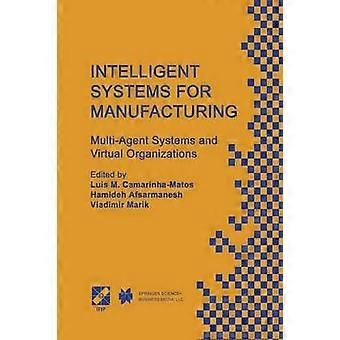
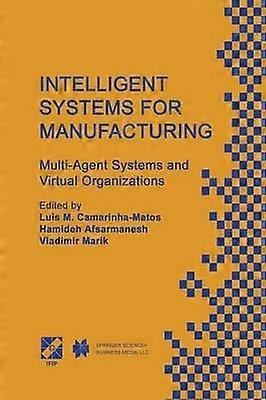
Intelligent Systems for Manufacturing
One: Multi-Agent Systems and Mobile Agents. - An agent-based approach to holonic manufacturing systems. - PVS 98 agent models and their application in production planning. - Mobile Agent technology in support of sales order processing in the virtual enterprise. - Using multiagent systems and the Internet in care services for the ageing society. - Two: Multi-Agent Systems in Scheduling. - Multiagent perspectives to agile scheduling. - Decentralised resource allocation planning through negotiation. - Scheduling in a Multi-Agent Environment. - Three: Building Multi-Agent Systems. - Agents and objects: Towards component integration for manufacturing systems re-engineering. - Analytical design methodology of agent oriented manufacturing systems. - Agent-based manufacturing: A database point of view. - Four: Intelligent Supervision Systems. - Application of machine learning techniques in water distribution networks assisted by domain experts. - Fuzzy cognitive map model for supervisory manufacture systems. - Using of expert systems in evaluation of high-voltage insulating systems. - Five: Virtual Enterprises. - Virtual enterprises: A Mexican case study. - Concurrent engineering in virtual enterprises: The extended CIM-FACE architecture. - Composing enterprise models: The extended and the virtual enterprise. - Six: Infrastructures for Virtual Enterprises. - Basic services for the management of Virtual Enterprises: A case study. - Secure electronic commerce in virtual enterprises of SMEs. - Extended enterprise communications based on the client / server paradigm. - Seven: Collaborative Work. - Telework Business Process Co-ordination The supporting tool engineering life cycle. - The coach methaphor in CSCW decision making system design. - Eight: Knowledge Based Systems in Design. - Modelingexpertise for selecting manufacturing technology. - Some artificial intelligent techniques to design robotic systems. - Support for component based systems: Can contemporary technology cope?. - Nine: Planning and Scheduling. - A CIM application of a multi-agent system. - Simultaneous design and process planning by indicators. - Solving resource-constrained project scheduling problems using tabu search. - Ten: Modeling in Manufacturing. - Object oriented modelling of product oriented manufacturing systems. - Enhanced production flow schema for modeling the complex resource sharing system. - AOP3S: A balanced approach to model distributed manufacturing systems. - Eleven: Manufacturing Information Systems. - Perspective: A standards-based manufacturing information system. - An approach for real-time applications engineering. - Information systems for eco-effective manufacturing. - Twelve: Product Data Management. - Rule-based management of product data in CIM systems. - Integrating manufacturer and customer: The funSTEP way. - Integrated product model centred design in a virtual design office. - Thirteen: Anthropocentric Approaches in Manufacturing. - Information systems requirements specification through the mediation of technical and organizational perspectives. - Representation of human intent in product models. - Assistance systems supporting operators in manufacturing. - Fourteen: Quality Management. - Knowledge based methods and tools for TQM in small batch flexible manufacturing and complex assembly. - Computer aided part programming for improved part quality and productivity. - Fifteen: Soft-Computing. - Using fuzzy logic in high level control functions. - Fuzzy optimal control of mechanical systems. - A simple robust fuzzy-logic sliding-mode controller of the diagonal type. - Sixteen: PatternRecognition and Diagnostics. - An intelligent pattern recognition algorithm and its application in cutting tool condition monitoring process. - Vision-based sensors for production control The experience gathered in applications. - Seventeen: Simulation and Design. - Integration of manufacturing system and product design wit DMU. - Development of a feature-based computer-assisted fixturing system. - Eighteen: Theoretical Aspects of Design. - A contribution to algebraic approach for a CAD/CAPP specification. - Interactive design of integrated systems. - Human integration and participation in time constraint workshops with limiting transportation resources. - Nineteen: Workshop 1: Soft-Computing for Automation. - Object-oriented implementation of fuzzy logic systems. - Scheduling the arrivals in a no-wait flowshop with fuzzy processing times. - Fuzzy approximation of the functions minimum and maximum. - Fuzzy knowledge-based prediction of yeast's morphological characteristics for sparkling wine manufacturing. - Twenty: Workshop 2: Multi-Agent Systems. - Problems of learning in multi-agent systems. - User interface for multi-agent systems: A case study. Language: English
-
Merk:
Unbranded
-
Categorie:
Computers & Internet
-
Artiest:
Luis M. Camarinha-Matos
-
Uitgever / Label:
Springer
-
Formaat:
Paperback
-
Aantal pagina's:
634
-
Verschijningsdatum:
2013/02/25
-
Taal:
English
-
Fruugo-ID:
450895304-950606078
-
ISBN:
9781475755473
Levering & retouren
Verzonden binnen6 dagen
Verzending vanaf Verenigd Koninkrijk.
We doen ons best om ervoor te zorgen dat de producten die u bestelt volledig en volgens uw specificaties bij u worden afgeleverd. Mocht u echter een onvolledige bestelling ontvangen of andere artikelen dan degene die u heeft besteld, of als er een andere reden is waarom u niet tevreden bent met de bestelling, dan kunt u de bestelling retourneren, of welk product dan ook die bij de bestelling was inbegrepen, en ontvangt u een volledige terugbetaling voor de artikelen. Bekijk het volledige retourbeleid